Sodium and Sugar Reduction: F&B Strategies to Reformulate Menus Without Losing Customers
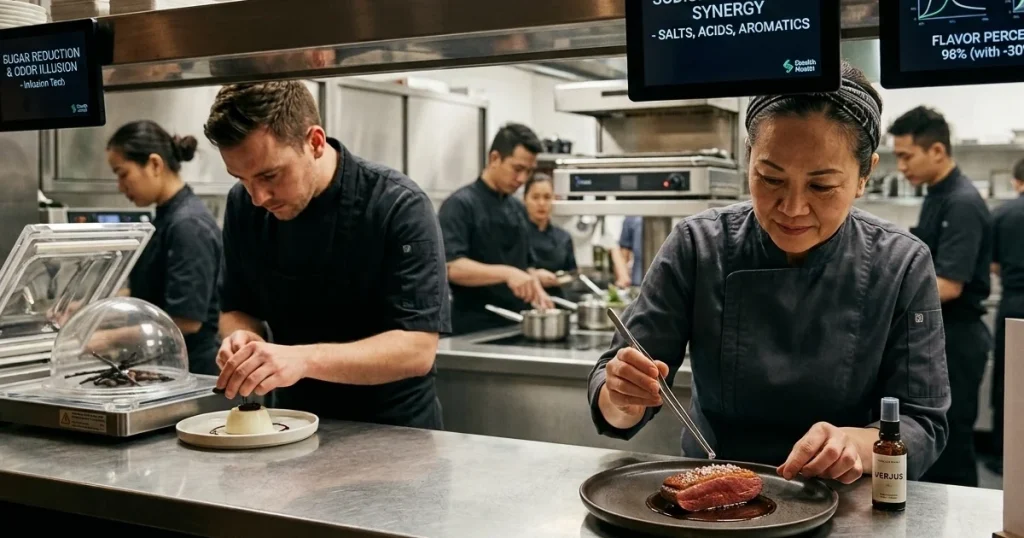
In an F&B market increasingly driven by transparency, health trends, and clean labels, reducing sodium and added sugars is no longer just a dietary option—it is a business and regulatory imperative.
However, for a culinary director or executive chef, recipe reformulation is a delicate balancing act. Sugar and salt are not just flavor enhancers; they serve as structural pillars, preservatives, texturizers, and key drivers of customer satisfaction. How can you optimize the nutritional profile of your dishes without sacrificing palatability or risking your average ticket size?
Here are the technical and strategic keys to adapting your culinary standard operating procedures (SOPs).
1. The Savory Segment: Mastering Sensory Illusion and Natural UMAMI
Salt (sodium chloride) acts as a powerful taste modifier, suppressing bitterness while amplifying the perception of volatile aromas. To lower sodium levels across your menu without creating a sensory “flavor void,” kitchen teams must leverage ingredient synergies.
- Maximize Free Amino Acids (Umami): Umami triggers salivary receptors that mimic the feeling of richness and salinity. Incorporate ingredients with high concentrations of natural glutamates and inosinates: dehydrated mushrooms (shiitake, morels), tomato pastes, black garlic, inactive nutritional yeast, or subtle touches of miso paste.
- The Acid Pulse Technique: Organic acids (citric, malic, acetic) stimulate the same ion channels on the tongue as sodium. Adding a dash of fresh citrus juice, specialty vinegars, or verjus just before plating creates a sharp acid peak that compensates for a 20% to 30% reduction of salt in the kitchen.
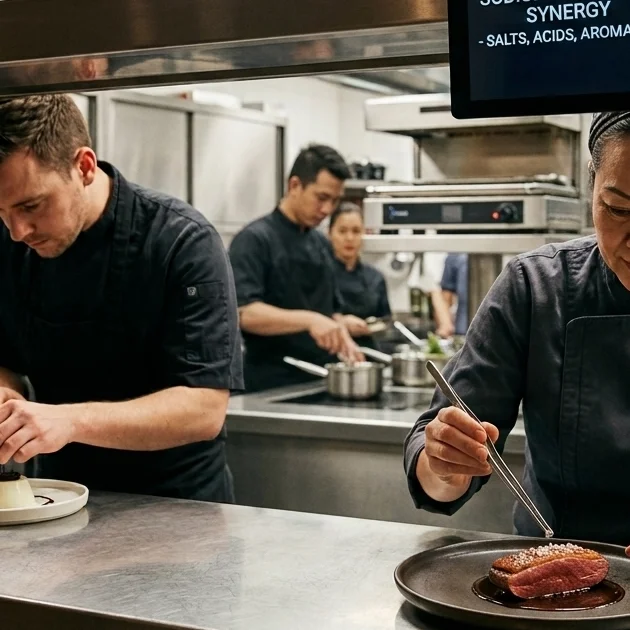
- Asymmetric Salt Distribution: Neurogastronomy shows that the brain perceives salt much more intensely when it is concentrated on the food’s surface rather than dissolved uniformly throughout. Instead of salting a broth or a farce during bulk prep, prioritize a geometric finishing touch (flaky sea salt, smoked salt crystals) applied precisely at the final pass.
2. The Sweet Segment: Managing Rheology and Cryoprotection in Pastry Production
In mass catering and pastry operations, sugar (sucrose) plays a major technological role: it retains moisture (humectant), structures dough via caramelization, lowers the freezing point (cryoprotection in gelatos), and provides body and viscosity.
- The 25% Rule of Thumb: In most baked goods, travel cakes, mousses, and biscuits, sugar can be safely reduced by up to 25% without altering the molecular structure, crumb density, or bake performance. Beyond this threshold, structural integrity requires alternative bulking agents.
- Upcycling Fruit By-products: To replace refined sugar while maintaining volume, integrate upcycled fruit powders (apple fibers, dried citrus pulp) or highly concentrated fruit purées. These ingredients provide functional dietary fibers (which bind water similarly to sugar) and intrinsic fruit sugars (fructose).
- Leveraging Cross-Modal Odor Illusions: The human brain naturally associates specific aromatic profiles with sweetness due to past culinary conditioning. Cold-infusing or vacuum-packing exhausted vanilla pods (maximizing food waste valorization), tonka bean, Ceylon cinnamon, or green cardamom allows you to lower the actual sugar weight while maintaining the same perception of sweetness for the guest.
The Business Strategy: The Art of “Stealth Health”
The biggest mistake in F&B marketing is plastering “Low Sodium” or “Sugar-Free” flags across your main menus. Market research consistently shows that these callouts trigger a negative bias in consumers, who instantly anticipate a bland experience.
The Winning Approach: Practice progressive, invisible reduction—known as Stealth Health. Reduce salt and sugar levels by 5% to 10% with every menu rotation (every 3 to 6 months). Your regular customers’ palates will naturally recalibrate without them noticing. Instead of marketing the “absence” of ingredients, elevate the dish through storytelling: highlight the origin of your fresh herbs, the chef’s fermentation techniques, or the vibrance of your locally sourced produce.
By modernizing your recipe specs, you not only improve your brand’s wellness footprint, but you also sharpen your food costs by optimizing the use of raw, premium aromatics.