French Cuisine Through Vietnamese Eyes: Love or Cultural Shock?
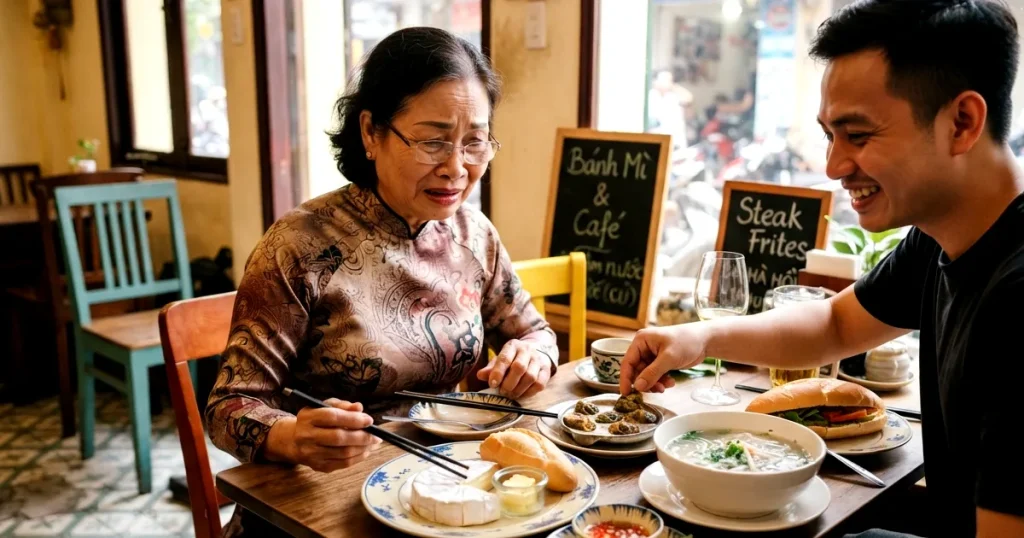
During the French presence in Vietnam from 1858 to 1954, the French attempted to import their domestic comforts, bringing along their architecture, language, and culinary traditions. They introduced ingredients entirely foreign to the tropical ecosystem of Southeast Asia: potatoes, carrots, onions, asparagus, butter, dairy, and coffee.
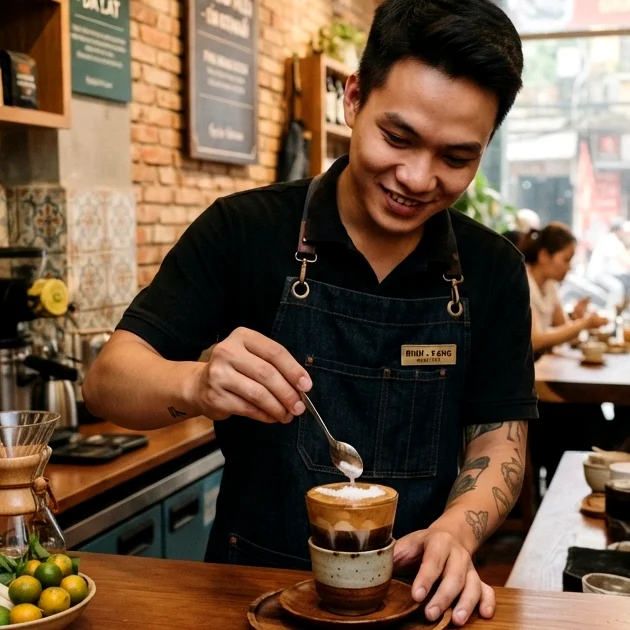
What began as an imposition of French taste over a century ago evolved into a proud culinary identity for Vietnam. Instead of adopting French cooking methods wholesale, Vietnamese cooks adapted these items to fit local preferences. For example, because fresh milk spoiled quickly in the tropical heat, they paired French drip coffee with canned condensed milk, creating the iconic Cà phê sữa đá.
Furthermore, the rigid French concept of structured courses was dismantled. The Vietnamese took elements of French cuisine and integrated them into their communal, single-bowl, street-food dining culture.
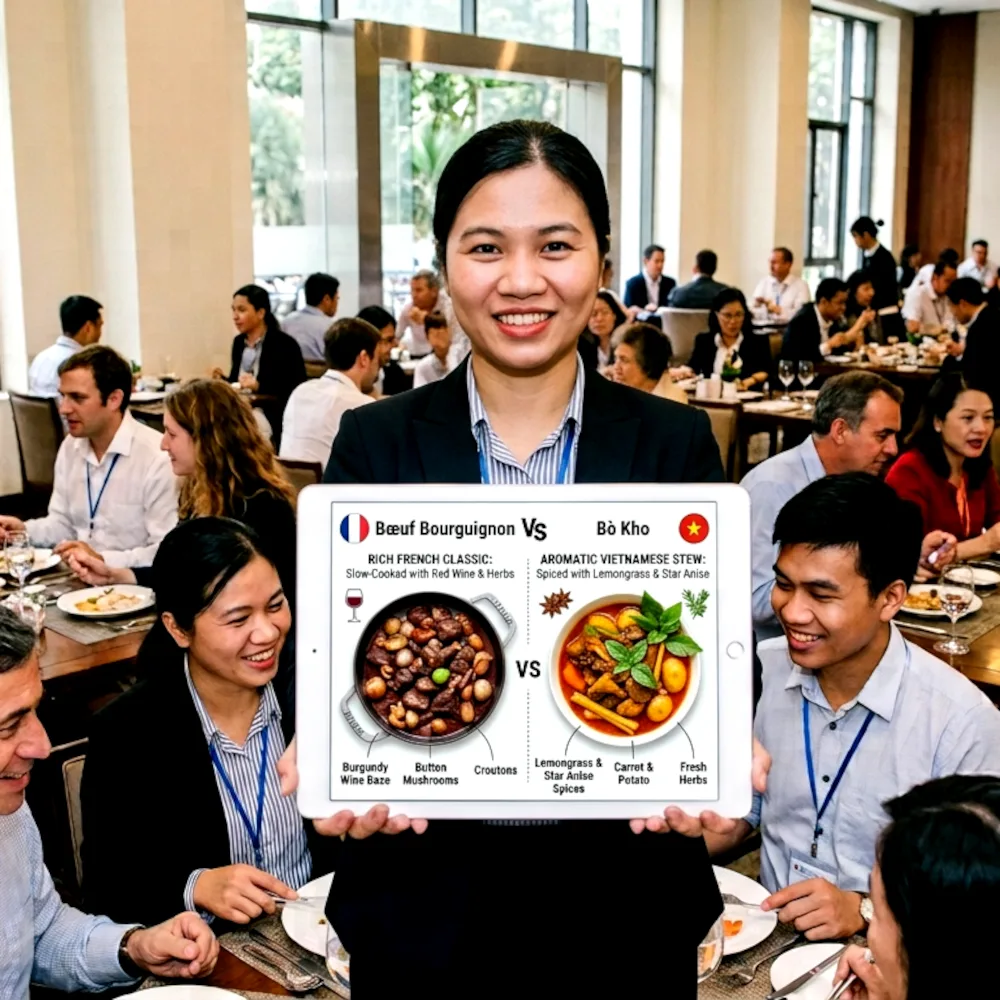
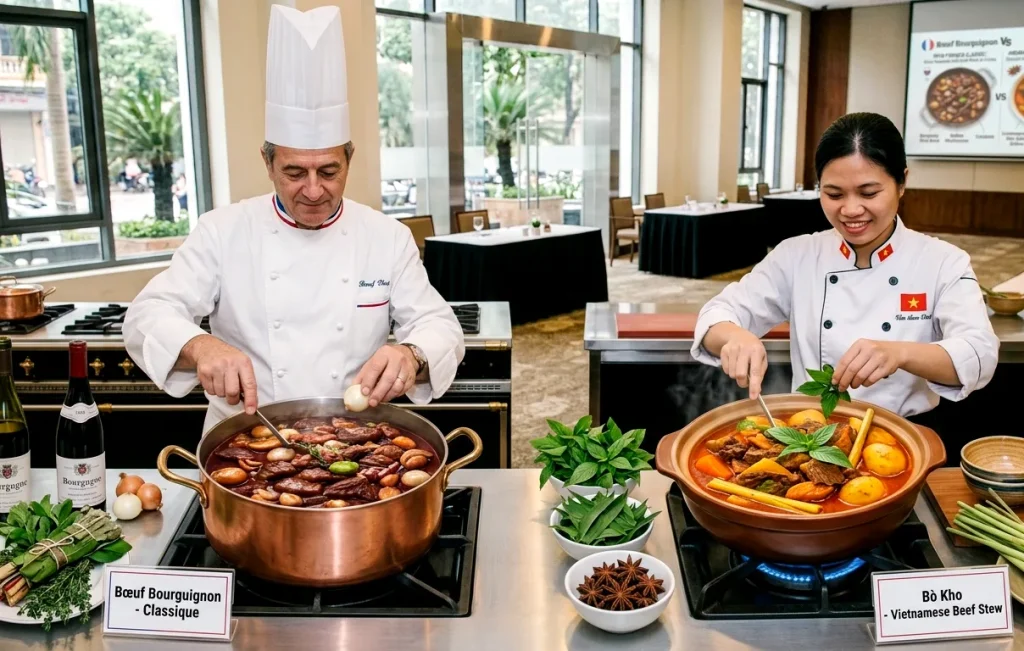
A prime example is the evolution of Bœuf Bourguignon:
- The French Original: A classic comfort food made by braising tough cuts of beef in rich red Burgundy wine, beef stock, mushrooms, and lardons, relying on a dark, deeply savory flavor profile.
- The Transformation: Vietnamese cooks adopted the method of cubing and slow-braising beef with carrots but completely omitted the red wine.
- The Vietnamese Twist: They replaced the wine and heavy stock with lemongrass, garlic, five-spice powder, annatto seed oil (for a vibrant orange-red color), and coconut water for natural sweetness. The result is Bò Kho, a fragrant, aromatic stew scooped up with chunks of crispy bánh mì or served over noodles.
Over a century later, this historical intersection has birthed some of the world’s finest fusion food—most notably the beloved bánh mì (a reimagining of the French baguette), phở (heavily influenced by the French beef stew, pot-au-feu), and bò kho.
The Immediate Bonds: Bread, Butter, and Coffee
For most Vietnamese, the initial introduction to authentic French dining offers a comforting sense of familiarity. Yet, when a modern Vietnamese diner sits down at an authentic French bistro for the very first time, the experience is rarely a seamless culinary homecoming. Instead, it is a complex emotional journey ranging from deep gastronomic appreciation to profound cultural shock.
- The Love: Vietnamese diners deeply respect French bread and pastries. Tasting a perfectly flaky, buttery French croissant or a crisp traditional baguette feels like discovering the genetic blueprint of their own street food.
- The Upgrade: The quality and abundance of high-grade butter and cheese (phô mai) in France are often viewed as a luxurious upgrade. Similarly, the rich aroma of French café culture resonates instantly with coffee-loving Vietnamese, even if they secretly miss the punchy sweetness of condensed milk.
The Great Temperature Shock: The Absence of “Nước Sôi”
One of the earliest and most jarring cultural shocks for a Vietnamese diner revolves around the temperature of food and beverages.
- The Culture Shock: Traditional Vietnamese dining heavily emphasizes piping hot meals. Soup must arrive bubbling, rice must be steaming, and ice-cold or room-temperature water is usually bypassed in favor of warm teas.
- The French Reality: Entering a French restaurant and being served a basket of room-temperature bread, cold charcuterie, and tap water with ice can feel physically unappealing to a Vietnamese palate. Similarly, dishes like steak tartare (raw, cold minced beef) or cold seafood platters (plateau de fruits de mer) trigger genuine hesitation, as raw or cold foods are traditionally associated with poor digestion in Eastern medicine.
The Flavor Profile: Missing the “Nước Mắm” Anchor
Vietnamese cuisine is celebrated for its vibrant, high-contrast flavor profiles. A single dish typically balances five distinct elements: sweet, sour, salty, spicy, and bitter, driven by fresh herbs, lime juice, chili, and fish sauce. By contrast, authentic French cuisine relies on a completely different philosophy built on subtlety, richness, and heavy reduction sauces made from butter, cream, and wine.
The Verdict: To an unaccustomed Vietnamese palate, a classic French dish like Escargots au Beurre d’Ail (snails in garlic butter) or Blanquette de Veau (veal ragout) can taste heavy, monochromatic, and overly rich (ngấy). Without the sharp contrast of fresh herbs, lime, or a pungent dipping sauce to cut through the fat, the richness of French food can quickly overwhelm a diner who thrives on acidity and spice.
The Pacing: Loneliness vs. The Art of Le Flâneur
In Vietnam, dining is vibrant, fast-paced, and communal. Dishes arrive all at once in the center of the table for everyone to share, accompanied by clinking glasses and shouts of “Một, hai, ba, dô!” (One, two, three, cheers!).
Consequently, the rigid structure of the French entrée-plat-dessert protocol can feel isolating. Sitting in front of an individual portion for three hours while waiting for meticulously timed courses often tests the patience of a Vietnamese diner. Over time, however, many learn to fall in love with this specific shock. They begin to view the slow pacing not as a delay, but as the ultimate respect for food and conversation—shifting from a culture of collective eating to an appreciation for the art of lingering over a meal.
The Ultimate Verdict: An Acquired, Respectful Love
Ultimately, the relationship between a Vietnamese diner and authentic French cuisine is rarely love at first bite. It is an acquired taste that requires unlearning the need for immediate spice and heat, and learning to appreciate the architecture of subtle, layered sauces. Once the initial cultural shock wears off, what remains is a profound mutual respect. Both cultures view cooking not merely as a way to fuel the body, but as a high art form, a pillar of family life, and a defining element of national identity.